








Why Casinos May Reject a New Withdrawal Method
A casino withdrawal form may display several cards, bank transfers and e-wallets, yet a newly added option can still be rejected. The casino must establish who owns the payment account, how the balance was funded and whether the selected service can receive withdrawals.This creates an important distinction: an available payment logo is not automatic permission to use that method. Deposit history, identity checks and the payment provider’s capabilities all shape the route taken by casino winnings.
The Deposit Leaves a Financial Trail
Free casino play does not create a banking relationship. Games listed at https://gry-hazardowe-zadarmo.com/ can be explored without registering a payment method, while a real-money deposit adds a traceable transaction to a casino account. The operator records the amount, time, payment type and transaction reference, then connects that deposit with the verified account holder.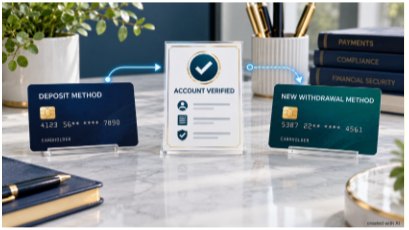
Suppose a $100 casino deposit arrives through Card A, but a later $260 withdrawal is requested through E-wallet B. Approving it without checks would move money between unrelated payment instruments. If the names differ, the casino may be dealing with a third-party card or a compromised account.
A new withdrawal method can therefore trigger checks covering:
- - the account holder’s legal name and date of birth;
- - ownership of the new card, bank account or e-wallet;
- - previous casino deposits and withdrawals;
- - the country, currency and availability of the method;
- - any unresolved chargeback or payment dispute.
Verification Covers the Payment Owner
Identity verification does not automatically verify every payment instrument added later. A passport confirms the customer’s identity, but not ownership of a newly entered bank account. The casino may request a statement, wallet page or partially obscured card image showing the holder’s name.This reflects a broader customer-due-diligence principle. The UK Financial Conduct Authority’s review of customer due diligence discusses identification, risk assessment and ongoing monitoring across regulated financial firms. Casino requirements depend on the licence, jurisdiction and operator policy.
Documents should be submitted only through the casino’s official verification channel. Full passwords, card PINs and security codes are not standard evidence of payment ownership and should never be supplied.
Deposits and Withdrawals Use Different Rails
A payment service that accepts casino deposits may not support casino payouts. Some cards process a deposit as a purchase but cannot receive an operator-initiated credit. Certain prepaid products are designed only for spending, while an e-wallet may limit gambling transactions by country or account status.| Situation |
Likely casino response |
Useful evidence |
| New bank account |
Hold withdrawal for ownership check |
Statement with name and account details |
| Third-party card |
Reject or investigate the method |
Proof concerning the original deposit |
| Deposit-only service |
Offer another approved payout route |
Verified bank or e-wallet details |
| Expired card |
Check whether the linked account remains open |
Bank confirmation or replacement card |
The casino cashier may consequently show different lists for deposits and withdrawals. A familiar brand appearing on the deposit screen does not guarantee that it can receive winnings.
The Original Method May Take Priority
Many casino operators try to return funds through a previously used method before approving a new one. This keeps the payment trail easier to reconcile and reduces the opportunity to deposit using one person’s card and withdraw to another person’s account.The treatment of deposits and winnings can also differ. An operator may return an amount corresponding to previous card deposits, then send the remaining casino winnings through a verified bank transfer. That arrangement is not universal: card networks, local rules and casino terms determine which routes are available.
Using several deposit methods can complicate the sequence. The cashier may allocate portions of a withdrawal according to earlier deposits rather than sending the entire balance to the newest option.
A Closed Card Needs Evidence

An expired card does not always mean that its underlying bank account has disappeared. A bank may route an eligible credit to a replacement card or connected account. By contrast, a closed account or discontinued e-wallet may require the casino to approve an alternative.
A practical request should contain:
- the casino username and withdrawal reference;
- the last four digits of the unavailable payment method;
- confirmation that the card, account or wallet is closed;
- evidence that the replacement method has the identical owner;
- a request for the casino’s approved alternative route.
Rejection Does Not Cancel the Balance
Rejecting a payment method is different from cancelling a valid casino withdrawal. The request may return to the account balance, remain pending or pause while verification is completed. The transaction status and casino message should identify which event occurred.Before making another request, it is worth confirming the exact reason, the documents required and the methods capable of receiving the payout. Repeatedly switching cards or e-wallets can create more payment records without resolving the original ownership question.
A casino withdrawal works most smoothly when the recipient, verified account and payment history point to one person. A new method is possible in many cases, but it must become part of that traceable record before the casino releases the funds.